

We will attempt to establish the state of the art regarding internet searches using AI (generative search) as of December 2025. To do this, we will use as sources various studies conducted by consulting firms such as McKinsey and Orbitmedia, and development companies like Semrush.
A simple way to get an idea will be to organize this content into 3 steps and a use case focused on B2B.
- How much is Artificial Intelligence used?
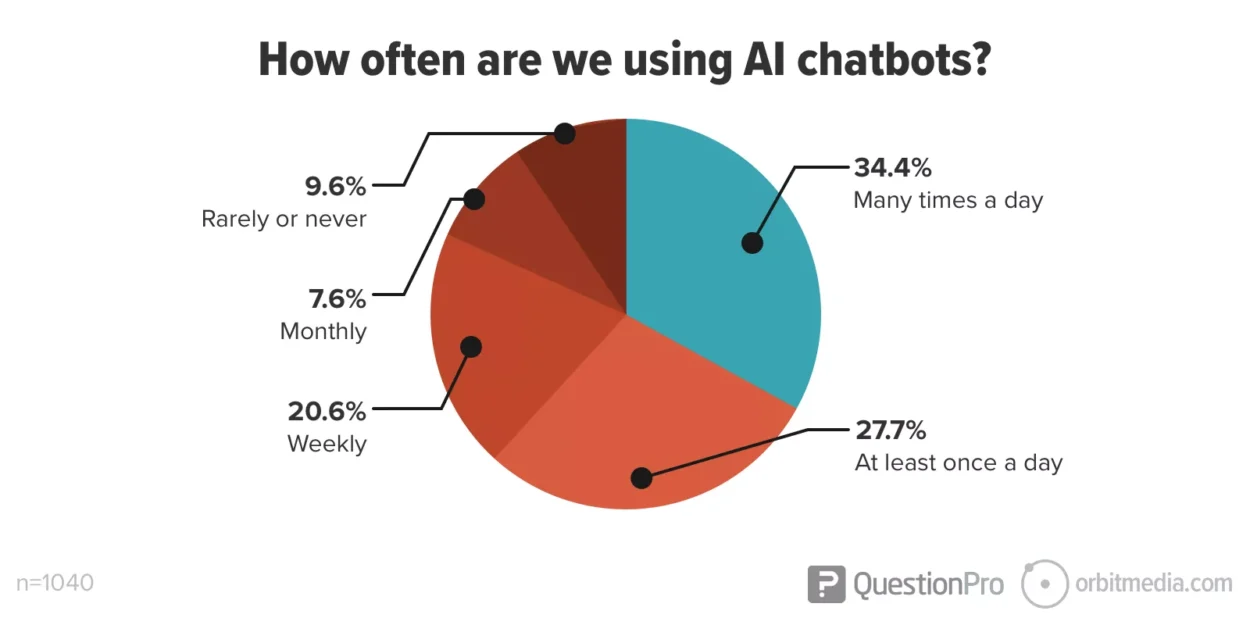
The first question aims to understand the actual use of AI. In this regard, and as we can see in the following graph, based on a study conducted by the consulting firm Orbital in 2025 on more than 1,000 users, it is clear that it is an intensive use, with more than 62% using it once or more per day.
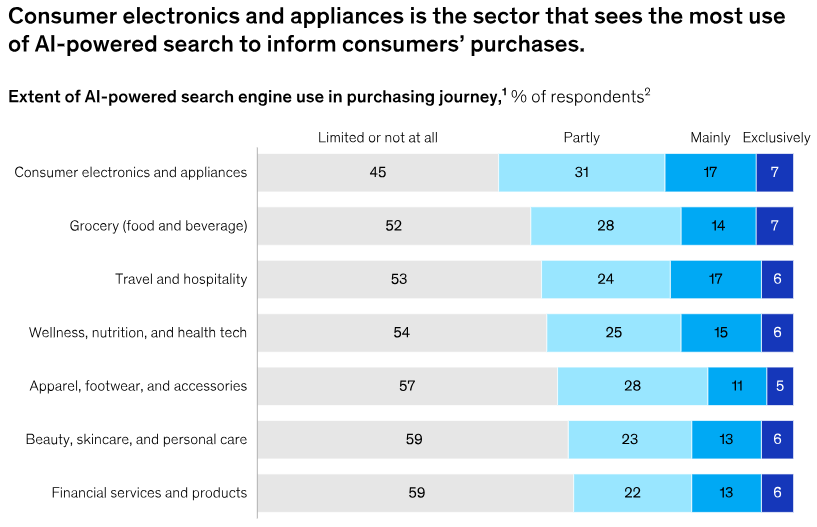
Delving deeper to understand consumer behavior when using these tools throughout their search journey, a McKinsey study conducted in the summer of 2025 with 1,927 individuals estimated that over 50% of global consumer traffic was conducted using AI tools for searches. Furthermore, the same study projected that $750 billion in spending would flow through generative searches by 2028. Regarding the sectors where AI-driven searches are most prevalent, consumer electronics are the most intensive, followed by food and beverages. In any case, the percentages are already significant across all sectors. The details are shown in this graph.
- What’s being used?
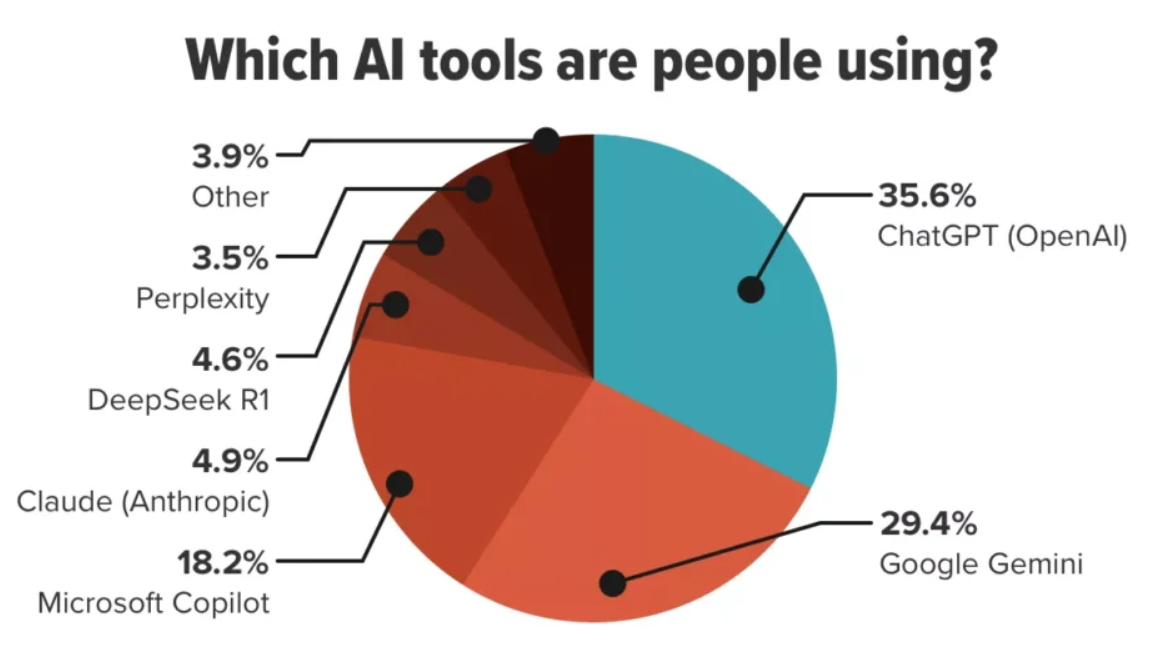
Currently, according to Orbit media data from May 2025, and keeping in mind that this data is highly variable, ChatGPT is the dominant player, followed by Google Gemini. However, this gap is likely to narrow due to the increasing use of AI agents, especially Microsoft Copilot, and it’s crucial to stay informed about emerging developments in this area. Furthermore, for certain activities, highly specialized AI will capture a significant share of the market, such as in design, image and video production, research, and even medicine and predictive analytics.
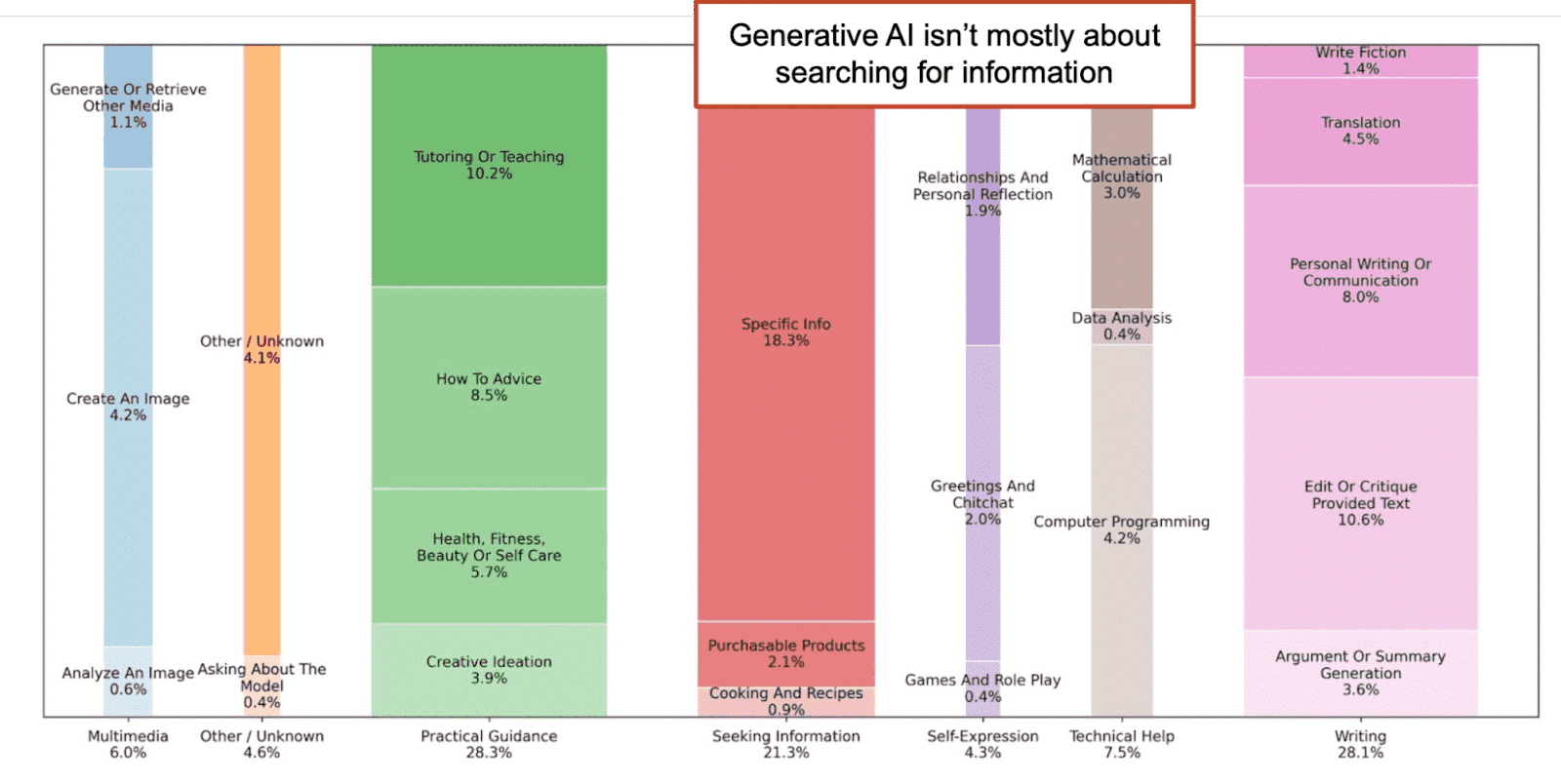
One of the most interesting aspects we observed is the use of different AI tools. For example, the amount of time dedicated to working with written content is surprising. Almost a third of this usage is devoted to reviewing, correcting, merging, and summarizing texts using various existing AI tools. This figure is quite remarkable. Nearly another third is used for learning, that is, using AI to help us perform all kinds of tasks, such as creating the best possible advertising, generating ideas for creative projects, or accessing health, beauty, and wellness tutorials (seeking a much more practical approach to saving time and increasing efficiency in various tasks). Finally, and this is the use that is the focus of this article, another 20% is dedicated to information retrieval, either prospectively or to receive a specific recommendation from among different options further along in the sales funnel.
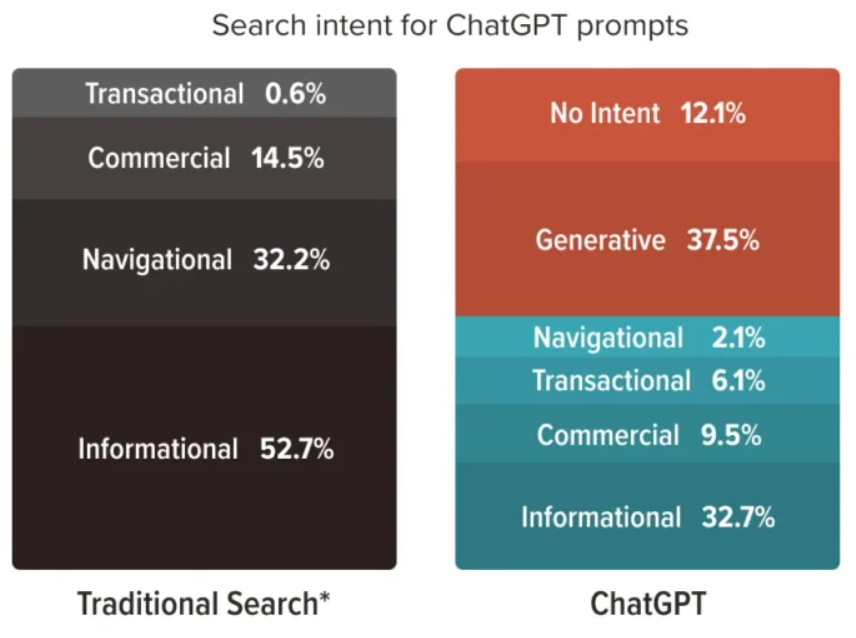
If we group all these tasks, as the AI analysis company Profund does, into two blocks based on the purchase intention or not of the prompts used to perform these searches, we see how almost 50% do have a clear purchase intention, which is very relevant.
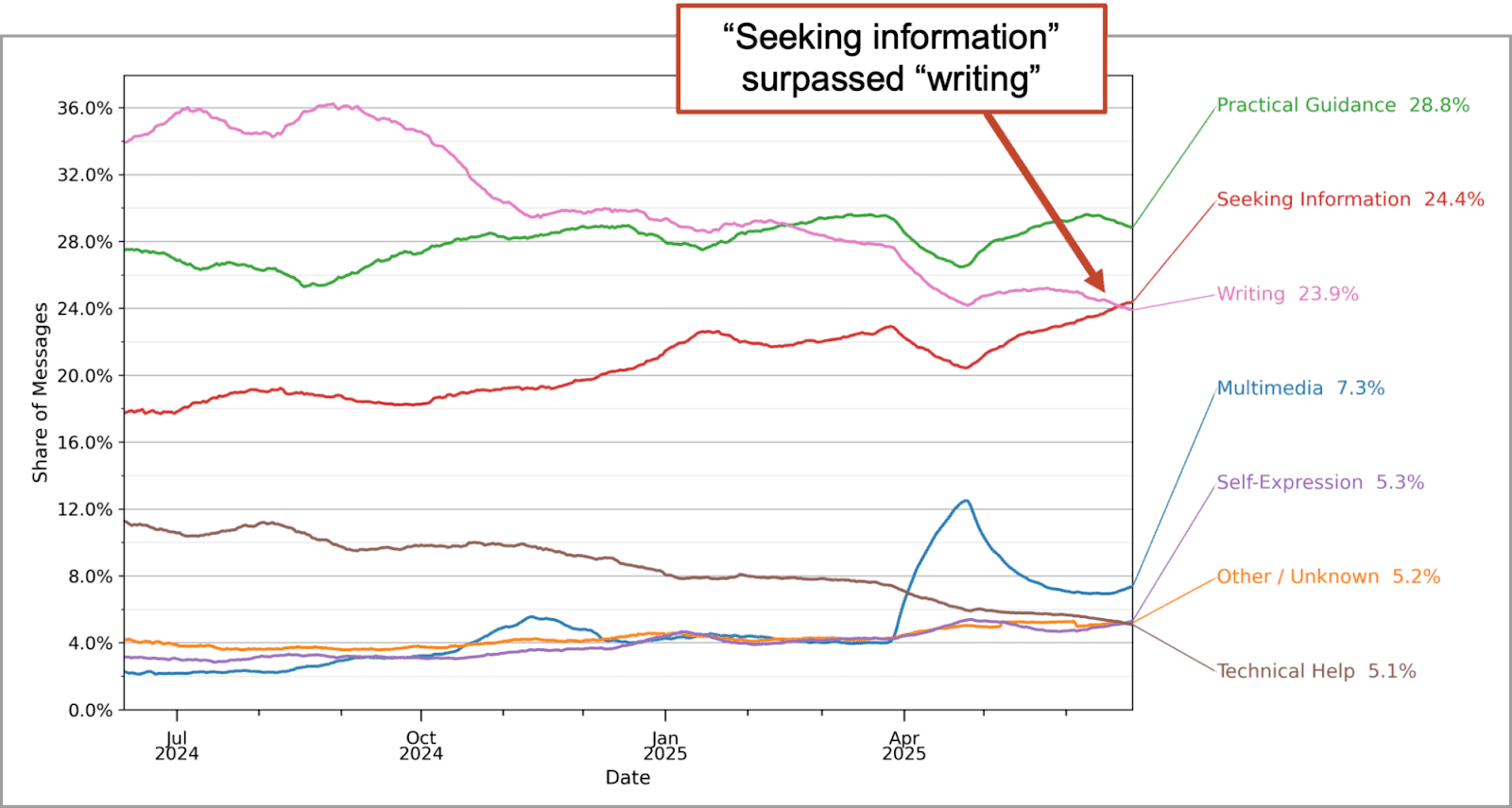
As with any new technology, we must closely monitor its evolution. In this regard, we see how assistance with writing tasks has plummeted in just a few months, going from representing 35% of the total to losing a significant portion of that market share, settling at approximately 24% by the end of 2025. However, the fastest-growing factor during this period is information retrieval, increasing from 16% to nearly 25%. This is the truly relevant aspect, and what we are all noticing in our daily use of AI tools, leading us toward a new paradigm.
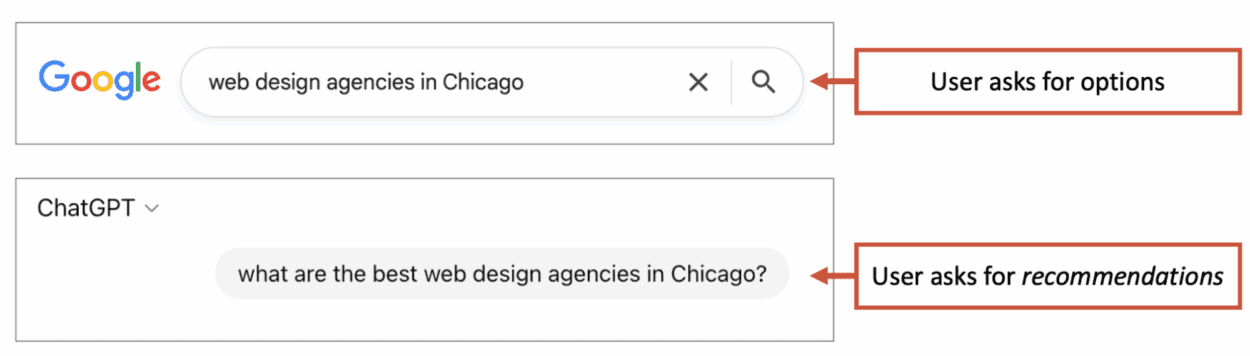
This paradigm we’re discussing indicates that we no longer search with the goal of obtaining a list of options to research, but rather we expect AI to do that work for us and provide pre-selected recommendations. As summarized in this graphic:
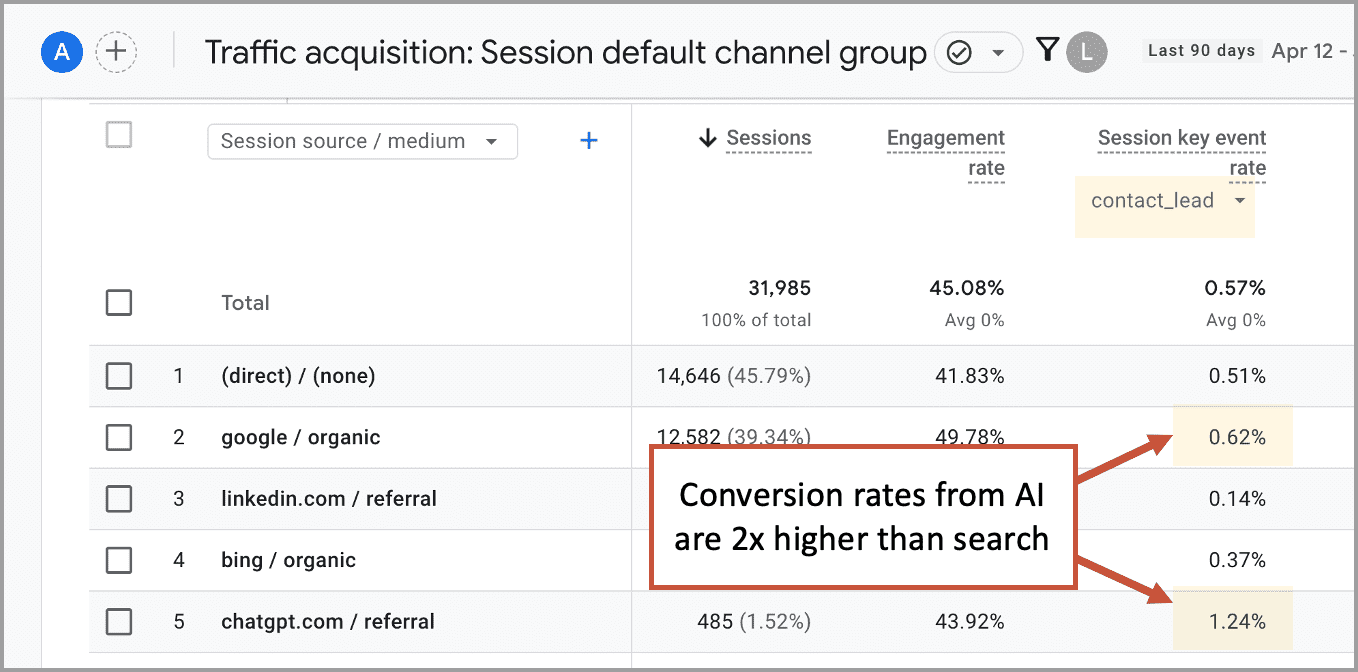
Furthermore, one of these companies, Orbital, conducted an experiment: it analyzed the origin of visits to its own site and found that searches originating from AI have DOUBLE the conversion rates of, let’s say, normal searches.
In short, it’s clear that the way users search for information online, and especially how they select products, has changed. Currently, more than half of this traffic comes through AI search engines like ChatGPT, Google Gemini, Microsoft Copilot, Perplexity, and others. This is an unstoppable trend that will shape searches and online traffic in the coming years. Companies that fail to adapt to this shift will struggle to survive.
A practical example is this Semrush study on share of voice (the percentage of brands mentioned in the total volume of prompts used in a search). It was conducted in October 2025 on 2,500 prompts across all stages of the sales funnel for five specific sectors: Finance, Technology and Software, Electronics, Fashion, and Professional Services. We focused on the most B2B-oriented sector: Professional Services. What we see in the chart below is how technology companies gain greater recognition and, therefore, appear at the top of the results (at all stages of the funnel). You have to go down to eighth place to find companies like UPS or FedEx, and even further down to find more purely service-oriented companies like Latham & Watkins..
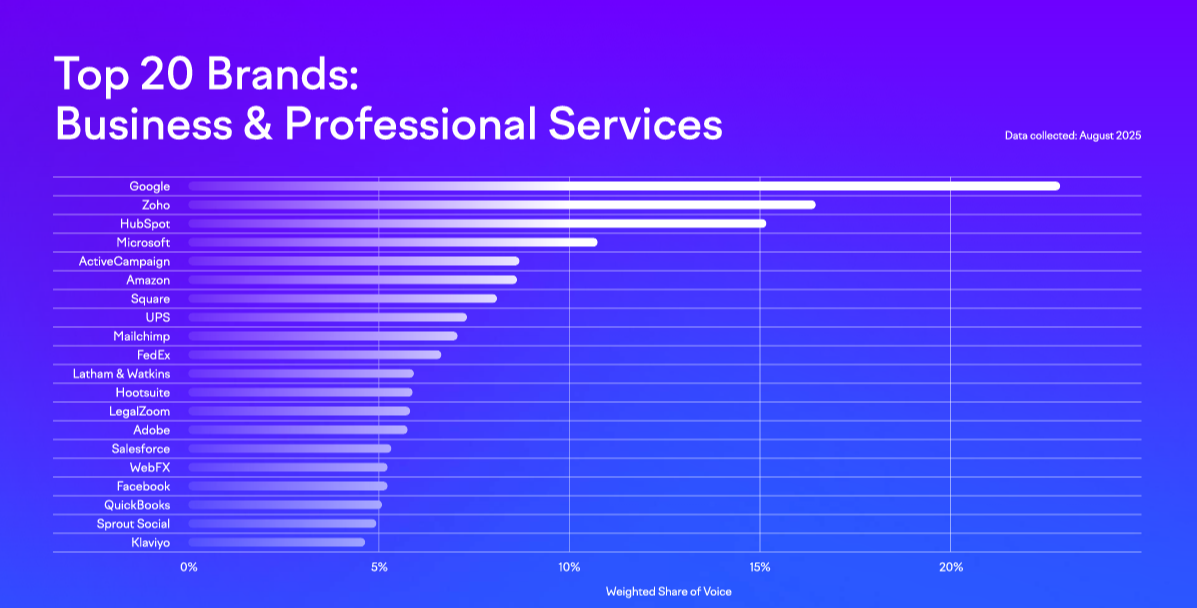
It’s clear that this has significant implications when planning content, channels, and the media where it will be launched. Now, we must always keep in mind how our customers search for us and how and where AI tools will find the requested information.
For this, the ideal approach, as always, is to work with professionals who can advise and help you along the way. We at Garlic B2B offer a free initial audit of your website and an assessment of the necessary measures.
Want a free initial evaluation? Write to us at info@garlicb2b.es
Bibliografía
Los informes usados para este artículo los puedes encontrar en los siguientes enlaces:
https://www.orbitmedia.com/blog/traditional-search-vs-ai-search/